SMALL LIFE · BIG ENCOUNTERS
Critterguide
Recognise Dauin's muck-diving stars and learn where and how to search responsibly.
01Sightings are never guaranteed.
02Never touch animals or shelters.
03Behaviour comes before the image.
 Species photo · 01
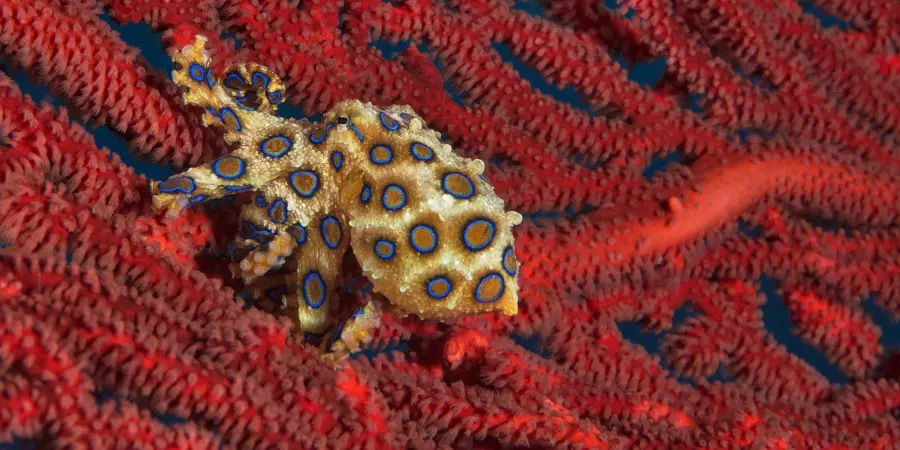
Hapalochlaena
Blue-ringed octopus
- Identification
- Small and often inconspicuous; vivid blue rings are most visible when the animal feels threatened.
- Habitat
- Sand, rubble, shells and small holes.
- Promising sites
- Secret Corner
Approach tipKeep well away and never block its escape. Highly venomous: never touch or provoke it.
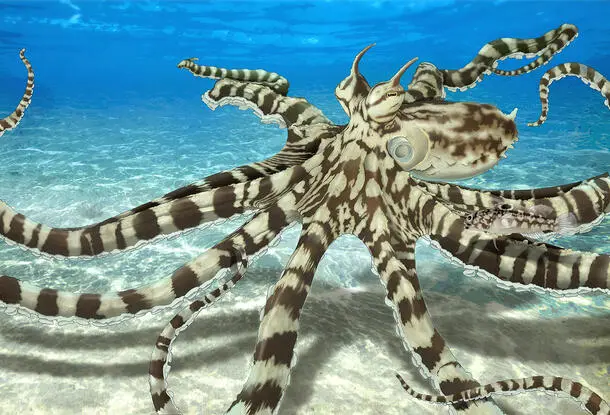 Illustration · 02
Thaumoctopus mimicus
Mimic octopus
- Identification
- Slender octopus with contrasting pale and dark bands that changes posture and movement.
- Habitat
- Open sand and silt with small shelters.
- Promising sites
- Secret CornerGinama-anMaayongtubig
Approach tipKeep your distance and wait for natural behaviour.
 Species photo · 03
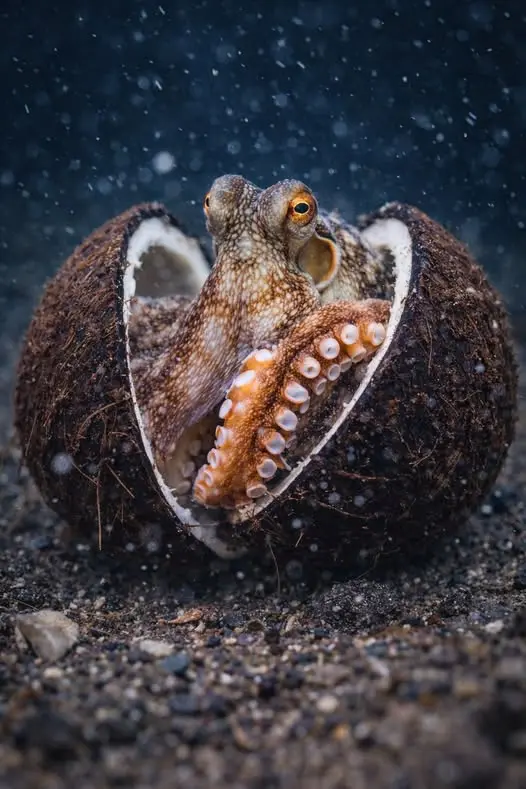
Amphioctopus marginatus
Coconut octopus
- Identification
- Distinct dark lines; may carry shells or coconut halves as a portable shelter.
- Habitat
- Soft sand with loose shells and debris.
- Promising sites
- Secret Corner
Approach tipWait for the animal to interact with its shelter on its own.
 Atmosphere image · 04
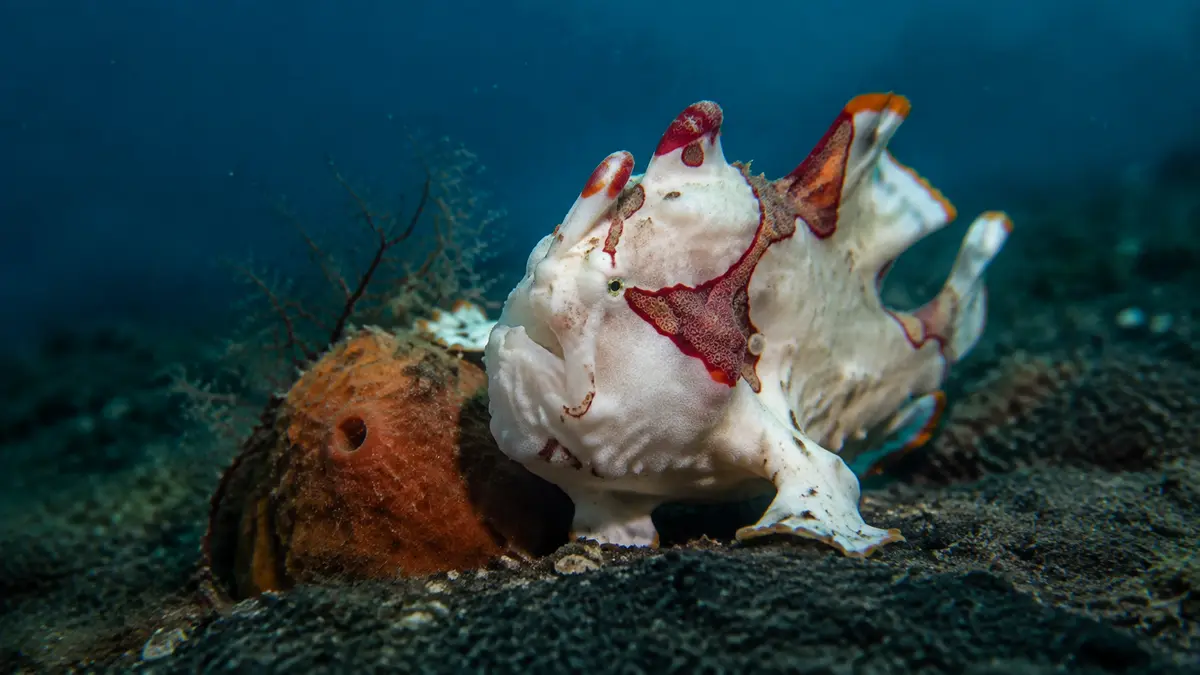
Antennariidae
Frogfish
- Identification
- Stocky body, leg-like pectoral fins and a lure above the mouth.
- Habitat
- Sponges, rocks, tyres, rubble and coral edges.
- Promising sites
- San MiguelGinama-anDauin NorthMaayongtubig
Approach tipFind the mouth, eye and lure before repositioning your camera.
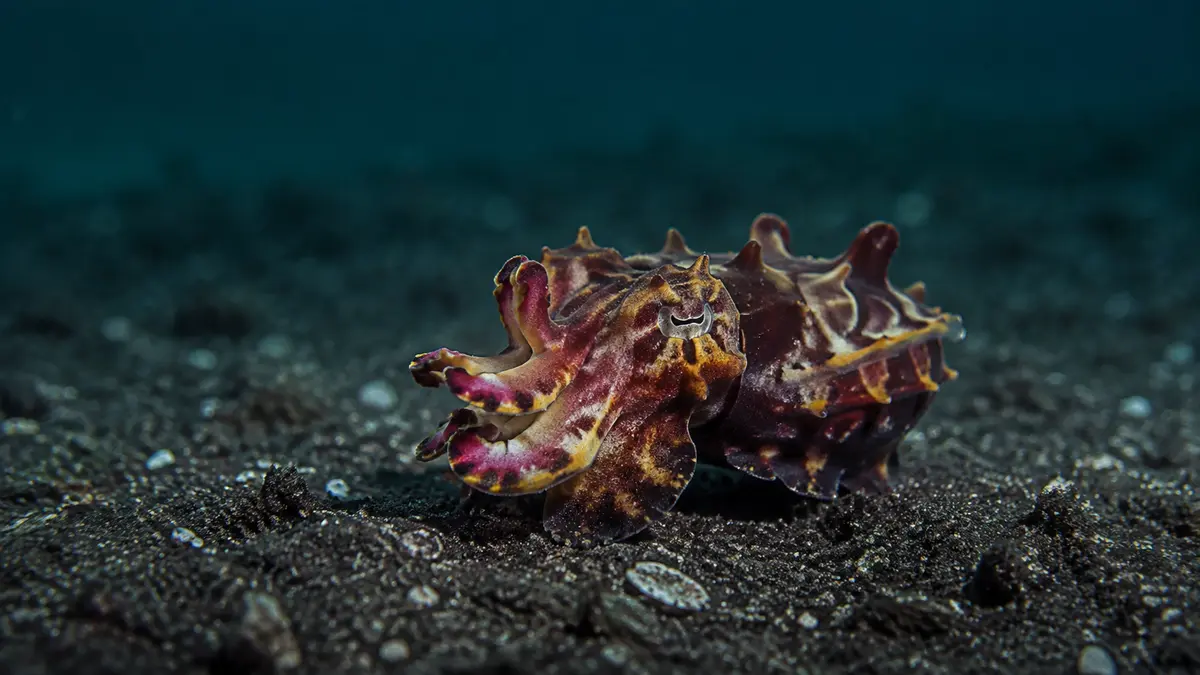 Species image · 05
Metasepia pfefferi
Flamboyant cuttlefish
- Identification
- Small cuttlefish with striking colour patterns and arm-like movement over the bottom.
- Habitat
- Dark sand and rubble.
- Promising sites
- Secret Corner
Approach tipNever disturb it simply to trigger a colour change.
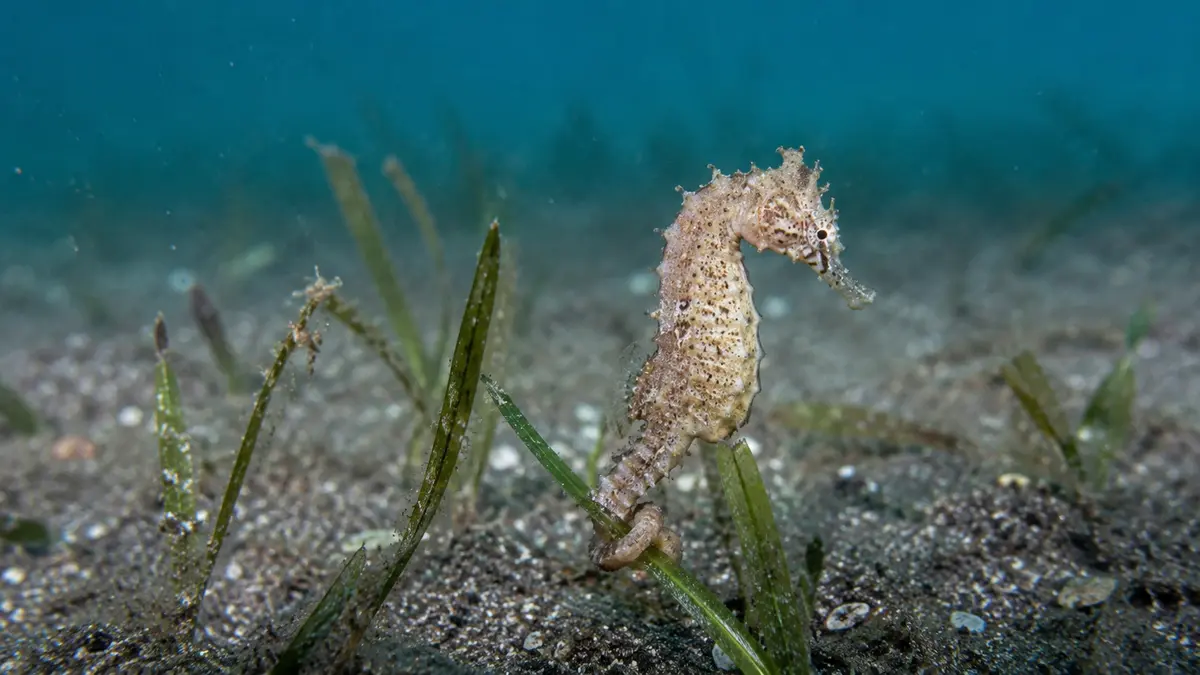 Species image · 06
Hippocampus
Seahorse
- Identification
- Upright body, curved neck, tube-shaped snout and prehensile tail.
- Habitat
- Seagrass, hydroids and sheltered structures.
- Promising sites
- San MiguelDauin NorthMasaplod
Approach tipApproach from the side and limit flashes. A turned-away head may signal stress.
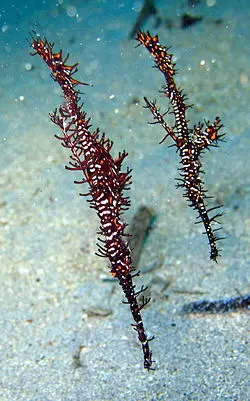 Species photo · 07
Solenostomidae
Ghost pipefish
- Identification
- A thin, leaf-like body often hanging vertically among seagrass or soft growth.
- Habitat
- Seagrass, coral edges and overgrown structures.
- Promising sites
- Secret CornerSan MiguelDauin North
Approach tipLook for a shape that moves slightly differently from its surroundings.
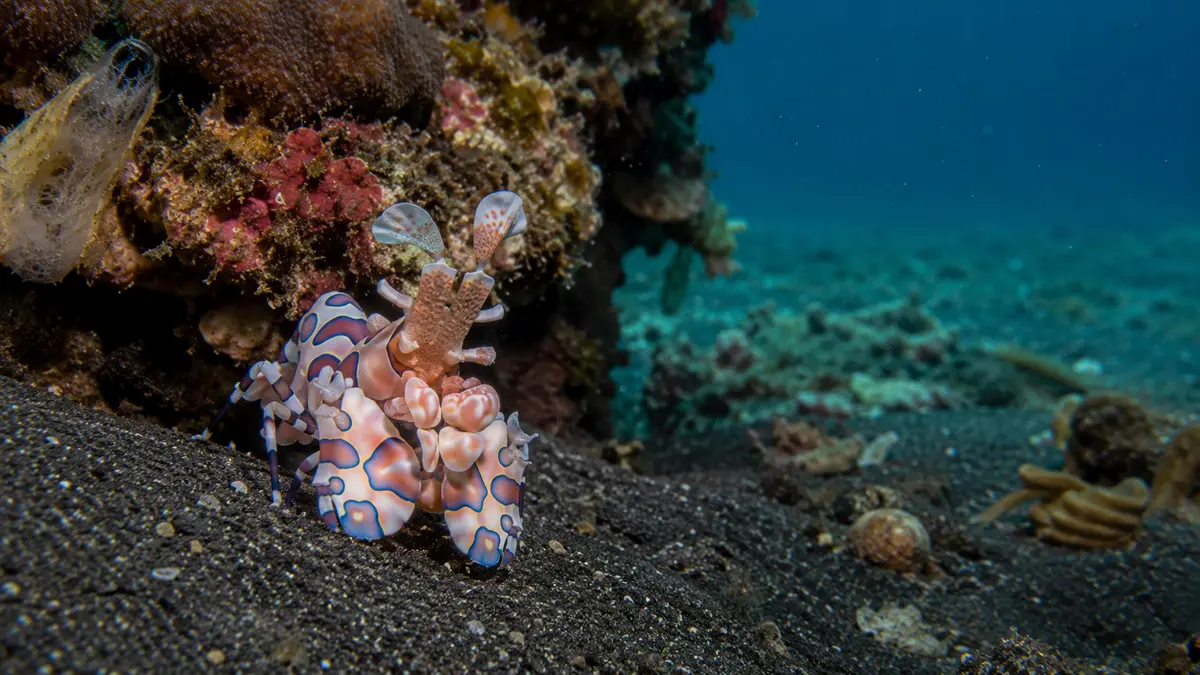 Species image · 08
Hymenocera picta
Harlequin shrimp
- Identification
- White body with large coloured spots and broad, leaf-like claws.
- Habitat
- Under rocks and on sheltered reef edges, often near sea stars.
- Promising sites
- San MiguelMasaplod
Approach tipNever move rocks or sea stars to arrange a photograph.
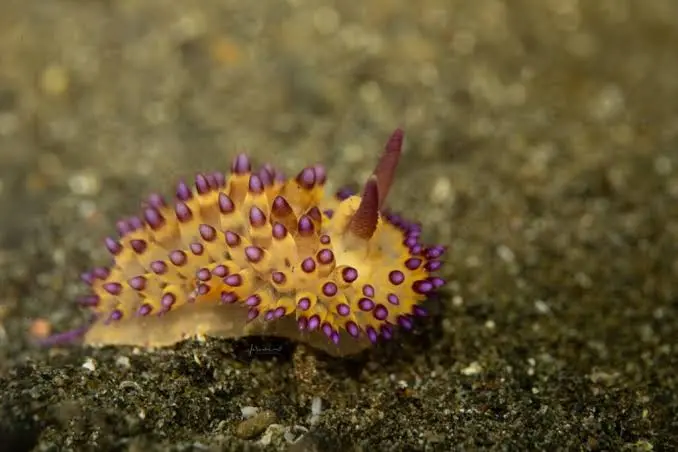 Species photo · 09
Nudibranchia
Nudibranch
- Identification
- Shell-less sea slug, often colourful, with rhinophores and external gills.
- Habitat
- Almost any habitat, usually near its specific food source.
- Promising sites
- San MiguelGinama-anMaayongtubigMasaplod
Approach tipFocus on the rhinophores and never move the animal or its food.
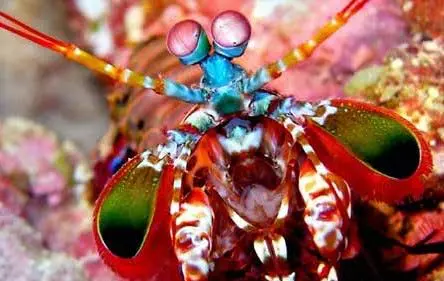 Species photo · 10
Stomatopoda
Mantis shrimp
- Identification
- Stalked eyes and powerful raptorial limbs. The image shows a peacock mantis shrimp, one species in this diverse group.
- Habitat
- Burrows in sand, rubble, rocks and artificial structures.
- Promising sites
- Secret CornerGinama-an
Approach tipStay outside the burrow and never insert fingers, camera or pointer.
GOOD MACRO DIVING
Observe without directing
A rare animal is not a prop. Leave it where it is, reduce light and flashes if behaviour changes, and give other divers space.